Clermont City Hall and New Resident Resource Guide
Utilities, homestead, HOAs, permits, and the numbers to call, for buyers under contract and new Clermont residents.
Getting Settled in Clermont
Buyers who are under contract in Clermont and new residents getting settled tend to hit the same practical questions quickly: who handles my water, how do I set up utilities, what is the homestead exemption deadline, and where do I go for city permits. Clermont is a full-service city, which means most of those answers run through the city directly rather than through Lake County.
Confirm and Set Up Utilities
The City of Clermont provides water, sewer, garbage, and stormwater utility services directly to most residents and businesses within city limits. To set up service or confirm what the city provides at your address, call Utility Billing at (352) 241-7320. Some addresses are served partially by Lake County or private utility companies, so address-level confirmation is the right first step.
Electric service for most Clermont addresses runs through Duke Energy Florida, and SECO Energy serves some areas depending on location. Confirm your electric provider before closing if you want service set up in advance. Internet and cable options vary by street and neighborhood, so verify availability at your address before committing to a provider.
Review HOA and CDD Documents
Most master-planned communities in Clermont are HOA-governed, and the rules vary more than buyers typically expect. Some communities have light-touch governance with modest fees and minimal restrictions. Others have architectural review boards, strict landscaping and paint color standards, limits on parking, and fees that run several hundred dollars per month.
A few newer communities in the 34714 corridor have CDD fees on top of HOA fees, which show up as a separate line on your property tax bill and are often missed by buyers who only review the HOA documents. The CC&Rs, bylaws, and most recent financial statements tell you what you are buying into beyond the home itself. For sellers, any pending special assessment is a negotiation point worth knowing about before you list, not one you want to react to at the closing table.
File for Your Homestead Exemption
Florida’s homestead exemption reduces your property’s taxable assessed value by up to $51,411 for 2026. The first $25,000 applies to all property taxes, including school district taxes. The second portion, up to $26,411 and now adjusted each year for inflation, applies to assessed value over $50,000 and only to non-school taxes.
The more financially meaningful benefit is the Save Our Homes assessment cap. It limits annual increases in your assessed value to 3% or the change in the Consumer Price Index, whichever is lower, and that cap compounds into real savings over a 5 to 10 year hold.
To qualify, you must own and occupy the property as your primary residence on January 1 and file with the Lake County Property Appraiser by March 1. Late applications are accepted only in limited circumstances, so treat March 1 as firm. Apply online or in person through lakecopropappr.com.
If you are selling a Florida homestead and buying in Clermont, ask about portability: you can transfer your accumulated Save Our Homes benefit to your new primary residence by filing form DR-501T with your new homestead application. The Erica Diaz Team walks through homestead and portability with every buyer and seller we work with in Clermont. If school zone access is part of your decision, the Clermont schools guide covers zone assignments.
On the November 3, 2026 ballot: Amendment 3 would raise the non-school homestead exemption to up to $150,000 in 2027 and $250,000 in 2028. It needs 60% of the vote to pass. Save Our Homes and portability stay the same, and people who become Florida residents on or after January 1, 2027 would start at $50,000. We will update this section after the election.
Plan Permits and Improvements
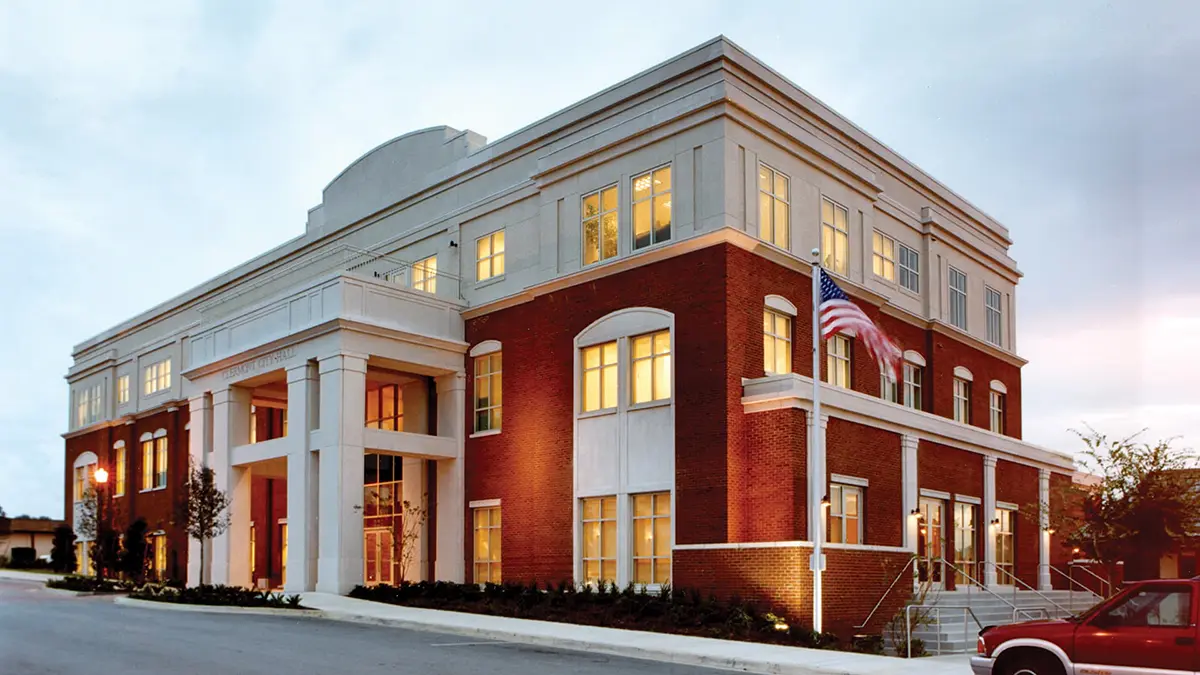
City Hall is at 685 W Montrose St and operates under a Council-Manager government structure. It houses the city manager’s office, community development, building and permitting, and utility billing. Clermont is the largest and most populous city in Lake County and runs its own full infrastructure, so building permits, code enforcement, utility setup, and garbage service go through city departments for most Clermont addresses.
Building permits for home improvements in HOA communities require both city approval and HOA architectural review approval, and the two processes run separately. Allow extra lead time if you are planning improvements after closing.
Know Who to Call
The Clermont Police Department is at 3600 S Highway 27, and the Clermont Fire Department serves the city from multiple stations. For any emergency, call 911 regardless of your address.
Frequently Asked Questions
Call City of Clermont Utility Billing at (352) 241-7320 to confirm what services the city provides at your address and to set up service. Water, sewer, garbage, and stormwater are handled by the city for most Clermont residents, though some addresses are served partially by Lake County or private providers. Electric service runs through Duke Energy Florida or SECO Energy depending on your address. Set up your electric account directly with your provider before your closing date.
You must own and occupy the property as your primary residence on January 1 and file with the Lake County Property Appraiser by March 1 of the same year. Late applications are accepted only in limited circumstances, so treat March 1 as firm. Apply online at lakecopropappr.com, in person, or call (352) 253-2150. If you are closing late in the calendar year, file for the following year as soon as you take ownership. Missing one year of the homestead exemption can cost you several hundred dollars in taxes.
A Community Development District fee is a special assessment that covers the cost of infrastructure bonds used to build community amenities like roads, drainage, and recreational facilities in newer developments. In Clermont, several communities in the 34714 corridor have active CDDs. The fee appears as a separate line on your annual property tax bill and does not go away after a set number of years the way some buyers assume. Always ask specifically about CDD fees when evaluating a home in a newer Clermont community, and confirm the current annual amount before making an offer.
Building permits for work within city limits are issued through City of Clermont Building Services at City Hall, 685 W Montrose St, and the city’s online portal at clermontfl.gov handles many permit applications. For work in an HOA community, you also need separate architectural review approval from your association before beginning any exterior improvements. The city permit and the HOA approval are two separate processes, and neither substitutes for the other. Call City Hall at (352) 394-4081 or Building Services at (352) 241-7315 for requirements by project type.
Clermont, Florida Resources
Community Resources
Cooper Memorial Library at 2525 Oakley Seaver Dr ((352) 536-2275) is part of the Lake County Library System with full digital and physical lending access. Clermont Waterfront Park on Lake Minneola is the city’s main outdoor gathering space, with a sandy beach area, playground, and pavilions, and the South Lake Trail runs through it.
The Clermont Farmers Market runs downtown every Sunday, 9 a.m. to 2 p.m. The Clermont Historic Village and the Florida Citrus Tower at 141 N Highway 27 are the city’s two most distinctive historical landmarks. For permits, code enforcement, or zoning questions about a specific address, the city’s website at clermontfl.gov has a community development portal.
We Handle the Details That Catch People Off Guard
The Erica Diaz Team handles the details that catch buyers and sellers off guard, from HOA documents to homestead filing deadlines. Talk to a Clermont real estate agent.